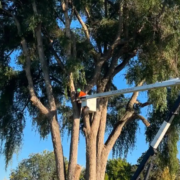
Fall Tree Care in the Treasure Valley: What Your Trees Need Before Winter
By late summer, Treasure Valley trees have spent months fighting triple digit heat, dry air, and long stretches without meaningful rainfall. Even trees that look healthy on the surface may already be under more stress than most homeowners realize. The transition into fall is the window where a little attention pays off for the rest of the tree’s life, long before winter dormancy sets in.
At Arbor Safe Tree Service, late summer and early fall are some of the busiest weeks of the year for exactly this reason. This guide walks through how much water your trees actually need right now, when late season trimming makes sense, and how to build a simple fall checklist that keeps your canopy healthy through the colder months ahead. A few small adjustments now can carry a tree through an entire Idaho winter in noticeably better shape. None of the steps below require special tools or a large amount of time, just a bit of attention while there is still warm weather to work with.
Why Late Summer Is a Turning Point for Treasure Valley Trees
Southwestern Idaho’s high desert climate means trees rely heavily on supplemental water throughout the growing season, since natural rainfall alone rarely covers what a mature tree needs in July and August. In fact, a full landscape with mature trees can require more than 40 inches of water over a single growing season to stay healthy, far above the region’s typical annual rainfall. According to University of Idaho Extension’s guide to tree selection and irrigation in southwestern Idaho, a large deciduous tree can lose more than 100 gallons of water a day through its leaves during the heat of summer, and when that water is not replaced it causes tissue damage that leaves the tree more vulnerable to pests and disease. That same guide recommends irrigating established trees deeply, to a depth of 12 to 15 inches, rather than relying on the shallow, frequent cycles most sprinkler timers are set to run.
This is why late summer care is not just about keeping a lawn looking green. It is the period where a tree either recovers enough reserve energy to handle fall and winter, or enters the colder months already behind. A few adjustments now make a measurable difference by the time the first freeze arrives.
How Much Water Do Your Trees Really Need Right Now?
Established trees generally need deep watering that reaches well past the trunk, extending from roughly halfway between the trunk and the edge of the canopy out beyond the drip line, since that is where most of the active root system sits. A simple guide many arborists use is about 10 gallons of water for every inch of trunk diameter at each watering, which means a two inch tree needs around 20 gallons while a mature shade tree may need considerably more. Lawn sprinklers rarely deliver enough water at that depth, so a slow soaking hose or drip system left running for an extended period is usually more effective than a quick daily cycle.
A two to three inch layer of mulch around the base of each tree makes a noticeable difference alongside a good watering routine. Mulch slows evaporation from the soil surface, keeps root zone temperatures more stable through hot afternoons, and cuts down on competition from grass and weeds pulling moisture away from the tree. Keep mulch pulled back a few inches from the trunk itself, since piling it directly against the bark can trap moisture and invite decay. A refreshed mulch ring in late summer often does as much for a stressed tree as an extra watering session.
Why Deep, Infrequent Watering Beats Daily Sprinkling
Frequent shallow watering trains roots to stay near the surface, where they are more exposed to heat and more vulnerable during dry spells. Deep watering less often encourages roots to grow downward in search of moisture, which builds a tree that can better withstand dry spells over time. For most established trees in the valley, watering deeply every one to two weeks during the hottest months is more effective than watering briefly every day.
Best Time of Day to Water (and Why It Matters)
Morning watering, ideally before the heat of the day sets in, limits how much water is lost to evaporation before it ever reaches the roots. It also allows any moisture on the leaves or trunk to dry out during the day, which lowers the risk of fungal issues compared to watering in the evening and leaving the tree wet overnight. If mornings are not realistic on your schedule, watering in early evening is a reasonable second choice, though it is worth avoiding late night watering when possible.
How Do I Know if My Tree Is Drought Stressed?
The clearest signs are leaves that wilt or curl during the hottest part of the day even when the soil looks damp on the surface, along with early leaf drop or leaves that turn brown and crisp at the edges well before their normal fall color change. Bark that looks unusually dull or slightly shriveled, and branches that feel brittle when gently bent, are also common indicators. If you notice several of these signs together, increasing deep watering is the first step, but a tree that does not respond within a couple of weeks may benefit from a professional health assessment to rule out pests or disease working alongside the drought stress.
Should You Trim Trees in Late Summer or Wait for Fall?
Light, corrective trimming, such as removing dead or clearly broken branches, is safe throughout late summer and does not stress a healthy tree. Heavier structural pruning is generally better suited for late fall or winter dormancy, once the tree has dropped its leaves and its branch structure is easier to see clearly. Pruning too aggressively while a tree is still actively growing and already managing heat stress can pull energy away from recovery at exactly the wrong time. Our tree care FAQ page covers more detail on fall and winter service timing if you want to plan ahead.
Signs Your Canopy Needs Attention Before Winter
Watch for crossing or rubbing branches, dense, overcrowded growth that blocks airflow through the canopy, and any limb that looks structurally weak or unevenly weighted. These issues rarely resolve on their own, and they tend to become more obvious, and more urgent, once winter wind and snow load are added to the equation. Addressing them now, while the weather is still cooperative, is considerably easier than dealing with a failure later.
Is Fall a Good Time to Plant New Trees in Idaho?
Yes, early fall is widely considered one of the best planting windows in southwestern Idaho, alongside early spring. Soil temperatures are still warm enough to encourage root establishment, while cooler air temperatures reduce the stress newly planted trees experience compared to planting in the middle of summer heat. A tree planted in early fall has months to settle in before it needs to support a full flush of new growth the following spring, which generally gives it a stronger start than a summer planting would.
Building a Simple Fall Tree Care Checklist
A practical fall routine starts with adjusting your watering schedule to deep, infrequent sessions rather than daily light watering, and includes a walk around the property to look for cracked bark, dead limbs, or early signs of drought stress. It also means holding off on heavy pruning until the tree is closer to dormancy, refreshing mulch around the base of each tree to help retain soil moisture, and scheduling a professional hazard assessment if last year’s storms left any lingering damage unaddressed. It is also worth checking any irrigation timers or drip lines now, before the first cold snap, so a broken emitter or a stuck valve is not quietly starving a tree of water during the last warm weeks of the season. None of these steps require special equipment, but together they meaningfully improve how well a tree handles winter.
How Often Should Trees Be Professionally Inspected?
For most healthy residential trees, an inspection every one to two years is a reasonable baseline, though mature trees, trees near structures, or trees that have already shown stress benefit from more frequent checkups. A certified arborist can catch problems like internal decay, root damage, or early pest activity well before they become visible from the ground. Scheduling an inspection in late summer or early fall lines up well with the seasonal transition covered in this guide, giving you time to act on any recommendations before winter weather arrives.
Final Thoughts
Late summer stress does not have to follow your trees into winter. Watering deeply and in the morning, holding off on heavy pruning until dormancy, and walking your property for early warning signs are simple habits that add up to healthier, more resilient trees. A tree that goes into winter well hydrated and free of hidden damage is far better positioned to handle snow load and cold snaps than one that enters the season already stressed.
If you notice wilting, cracking, or a canopy that looks like it needs more than a hose can fix, Arbor Safe Tree Service has been caring for trees across Nampa, Boise, Meridian, Caldwell, Eagle, and Kuna since 1997. A certified arborist can walk the property with you and point out exactly what each tree needs before winter sets in. Schedule a free consultation today and get your trees ready for whatever this Idaho winter brings.