Tag Archive for: tree services

Three Signs Your Tree Is Dying in Treasure Valley

Caldwell businessman and Chamber of Commerce president Pete Olesen introduced the name “Treasure Valley” in 1959. He created the term to promote the region as a “treasure chest” of natural resources, agricultural opportunity, and economic potential.

Residents still see that idea reflected across the region, especially in the wide variety of trees that grow throughout Treasure Valley. However, the same trees that add beauty and shade to local properties can sometimes begin to decline.

In this blog post, you’ll learn about three common signs a tree is dying. If any of the following sounds familiar, contact Arbor Safe Tree Service to schedule tree services in Treasure Valley.

Tree Health Problems and Decay Common in Treasure Valley

Treasure Valley is a beautiful region with plenty of incredible tree species, but they all face threats. Here are some of the most common:

  • Bark beetle infestations that tunnel beneath the bark interrupt the tree’s ability to move water and nutrients.
  • Defoliating insects that feed on needles or leaves weaken the tree by reducing its ability to produce energy.
  • Root diseases attack underground root systems and slowly destroy the structural support that keeps trees stable.
  • Parasitic plants, such as dwarf mistletoe, drain nutrients from branches and gradually weaken the tree.

Learning the signs that a tree is dying helps you identify health issues sooner and take action before the damage spreads or the tree becomes a safety risk.

How To Tell if a Tree Is Dying

The best way to save a tree you think is dying is by looking for the early warning signs of tree decline. The sections below explain three of the most common.

Dead or Falling Branches in the Canopy

Dead branches often appear first in the upper canopy because the tree can no longer move enough water and nutrients to the outer limbs. Branches may lose leaves early, turn brittle, or snap during mild wind. When several limbs die at once, the tree may struggle with disease, insect damage, or severe root stress.

Large Cracks or Decay in the Trunk

The trunk supports the entire structure of the tree, so visible cracks or soft, rotting wood often signal serious internal damage. Fungal growth, hollow areas, or peeling bark can indicate internal decay. When the trunk loses structural strength, the risk of failure increases quickly.

Sparse Leaves or Discolored Foliage

Healthy trees produce dense, full foliage during the growing season. A dying tree often develops thin leaf coverage, smaller leaves, or unusual color changes. Yellowing, browning, or early leaf drop can indicate disease, root damage, or long-term environmental stress.

Call Arbor Safe Tree Service To Schedule Tree Removal Services in Treasure Valley

If you notice any of the signs a tree is dying mentioned in this blog post, call Arbor Safe Tree Service at (208) 465-9479 to schedule a professional inspection. We’ll sound out one of our trained and locally experienced arborists to diagnose your tree and determine whether removal or recovery is the best option.

Contact us today to talk about any symptoms of a dying tree you notice.
Who Is Responsible for Removing a Fallen Tree?

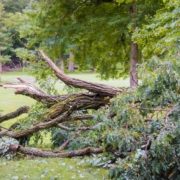
Having a fallen tree is already bad enough before you even start thinking about scheduling professional tree services in Treasure Valley. While ensuring your safety and that of your family is undoubtedly your priority, you’ll have plenty of questions once you do so, including “Who is responsible for removing a fallen tree?”

Read on to learn the answer.

Fallen Tree Removal Responsibilities

It’s hard to beat the benefits you enjoy from having trees growing on your front lawn or backyard. From providing shade in the summer to enhancing curb appeal and boosting property value, the perks are almost endless.

Unfortunately, what was once a huge plus can quickly become a headache. This is especially the case when it comes time to deal with a fallen tree. But who is responsible for doing so?

Here are the factors that will help you determine responsibility for removing the fallen tree and how to ensure you get the most out of your tree services.

Tree Ownership

In most cases, the owner of the tree will be responsible for removing the fallen tree. In Treasure Valley, we determine ownership by looking at where the tree’s roots were before it fell.

If the tree’s trunk straddled a boundary line, both you and your neighbor will be responsible for its removal. This usually complicates property owner liability issues.

If the city owns the tree, it will be responsible for removal. The city might also cover any damages caused, but only if you warned them about the dangers the tree posed before it fell.

Why It Fell

Figuring out who is responsible for removing a fallen tree will also require you to determine why the tree fell in the first place. If the tree was healthy and a storm knocked it down, the law considers this an act of God. In this case, whoever owns the property where the tree lands will be responsible for its removal.

However, in the case of sick, dead, or storm-damaged trees, whoever owns the tree will be considered negligent and will be held liable.

Insurance Coverage for Fallen Trees

The good news is that most policies cover tree removal and repairs if the tree falls on your property or causes neighbor property damage. You should pay attention to the fine print, though.

For instance, your insurance is likely to cover removal and damage costs if the tree fell because of natural causes. This might not be the case if the tree fell due to negligence or lack of care.

Scheduling Professional Tree Removal in Treasure Valley

As you can see, there are a lot of caveats when determining who is responsible for removing a fallen tree. Was it your tree, your neighbor’s tree, or did you share ownership? Why did it fall? Where did it fall?

Thankfully, consulting a professional arborist can help clear things up. Entrust that role to the certified team from Arbor Safe Tree Service. Contact us today at 208-465-9479.

Choosing Between Tree Trimming and Tree Removal Services in Treasure Valley

Over the years, you’ve grown attached to your tree, enjoying the charm and aesthetic appeal it brings. This is why, when you start noticing worrying signs, you may find yourself torn between trimming or removing it completely.

How can you know what to pick when scheduling professional tree services in Treasure Valley? Read on as we weigh the pros and cons of tree trimming vs. tree removal.

What Is Tree Trimming?

Trimming your tree is all about preserving its health and structure by removing large, overgrown, diseased, or dead branches. It also helps control the tree’s shape, which reduces safety hazards.

Regular trimming can enhance your tree’s health and longevity while keeping your Treasure Valley home safe and beautiful.

What Is Tree Removal?

While trimming focuses on preservation, tree removal does the opposite. It is a more involved process that entails chopping down the entire tree. At times, the process could also entail stump grinding or removal, depending on your preference or situation.

Choosing Between Tree Trimming and Tree Removal

Knowing what each process involves is the easy part. Deciding what option to go with might not be. The good news is that there are a few guidelines you can follow.

The key factors you need to keep in mind are your:

  • Tree’s health
  • Tree’s location
  • Risk exposure
  • Long-term property plans

When Is Trimming the Right Choice?

You should reserve trimming for trees that don’t pose a significant hazard to you and your property. The process is ideal for healthy trees that only need a bit of upkeep.

It can also be an option to consider if your tree has a few diseased, dead, or insect-infected branches. Getting rid of them can keep the rest of your tree safe from harm.

When Is Removal the Right Choice?

Though your first instinct will always be to keep your tree, sometimes, following that instinct would only expose you to further risk. While trimming can seem like the low-impact, more affordable solution, it might not be the best option for tree health and safety.

Removal is often less about cutting down your tree, but more about safeguarding the safety of your property, family, and neighbors. As such, it’s the option to go for if:

  • Your tree is diseased, dead, or severely damaged
  • Your tree is leaning dangerously close to your home or other structures
  • Your tree has invasive roots that pose a danger to your plumbing or foundation
  • The cost of ongoing tree services is too high

Call Us Today for Professional Arborist Services You Can Trust

Need help weighing tree trimming vs. tree removal? Trust Arbor Safe Tree Service to help you understand when each service is appropriate. If your tree poses a minor hazard or only needs routine care, trimming will do. However, if the tree creates major safety concerns, removing it will be better.

Contact us at 208-465-9479 to schedule a consultation to determine whether you need trimming or hazardous tree removal services.